20th Century · City of London

The Barbican: rising from the ashes of old Cripplegate

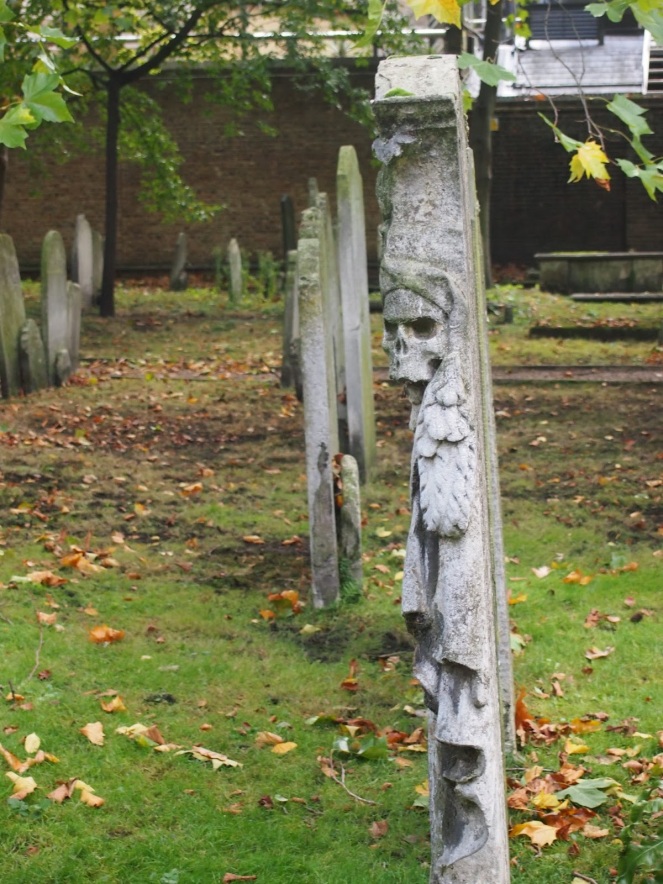
It’s quite easy to get lost in the maze of highwalks in London’s Barbican Estate, and to some it may be disorientating to discover a medieval church in the middle of the Barbican’s brutalist sprawl.  St Giles without Cripplegate is a rare survivor of the Great Fire – even if it didn’t fare too well during the Blitz – and its name is one of the last remaining references to this ancient corner of the Square Mile.

OLYMPUS DIGITAL CAMERA

Continue reading “The Barbican: rising from the ashes of old Cripplegate”

20th Century · Chelsea

Commemorating the heroic exploits of a WWI pilot

OLYMPUS DIGITAL CAMERA

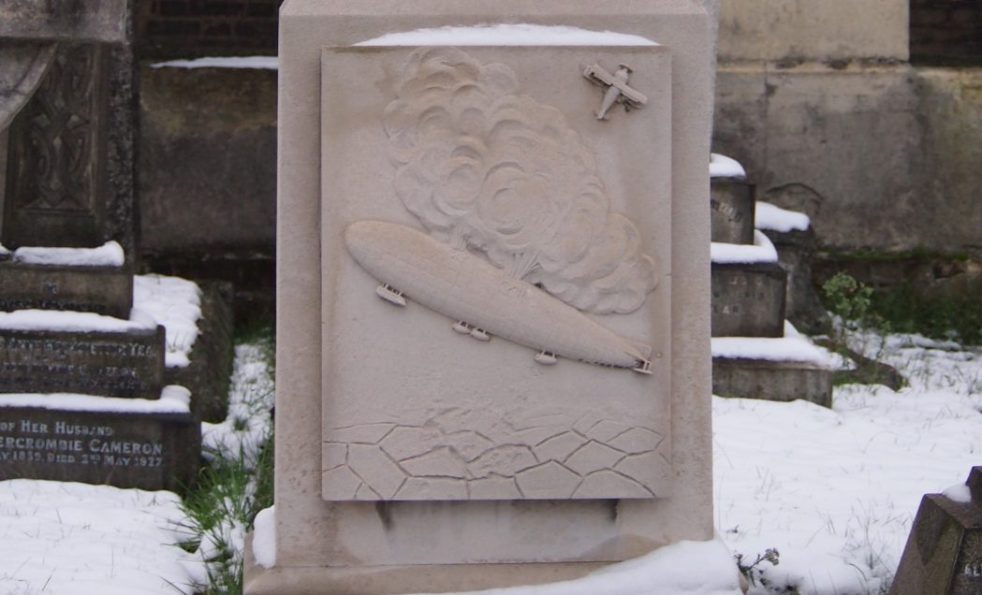
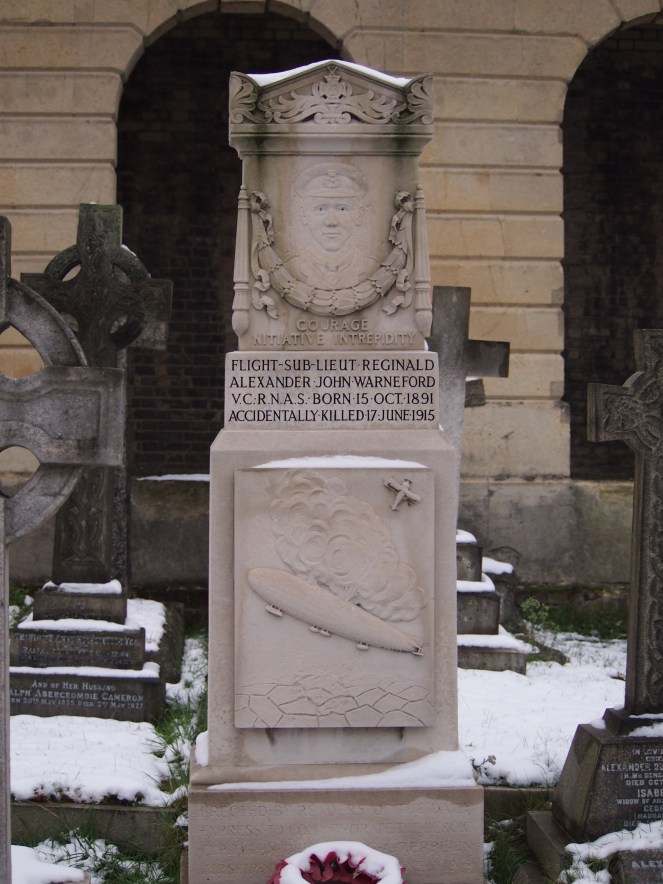
Brompton Cemetery is particularly rich in grand memorials.  In the centre of the cemetery, amongst the dark Victorian crosses and angels, stands a paler, more modern memorial.  The face of a young man stares out from an impressive, well cared for headstone.  Beneath the inscription is a dramatic image of a Zeppelin – one of the monstrous German airships of the First World War – falling to the ground in flames while a comparatively tiny aircraft flies to safety.  The headstone, which occupies a prominent spot in the cemetery, commemorates the bravery of one of the British Armed Forces’ first heroes of aviation – Flight Sub-Lieutenant Reginald Alexander John Warneford. Continue reading “Commemorating the heroic exploits of a WWI pilot”

19th Century · Nunhead

A hidden gem in south east London: Nunhead Cemetery

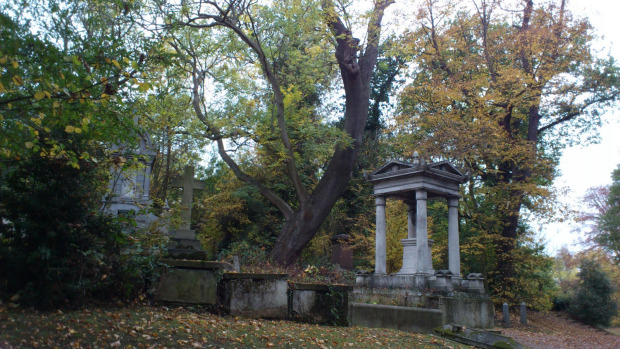
Nunhead is arguably the least well known of London’s “Magnificent Seven” Victorian cemeteries.  Like many of South East London’s interesting old sites, it often gets overlooked due to its lack of a nearby Tube station, although it’s actually a short walk from Nunhead Rail station, which is three stops from London Victoria.

DSC_0106
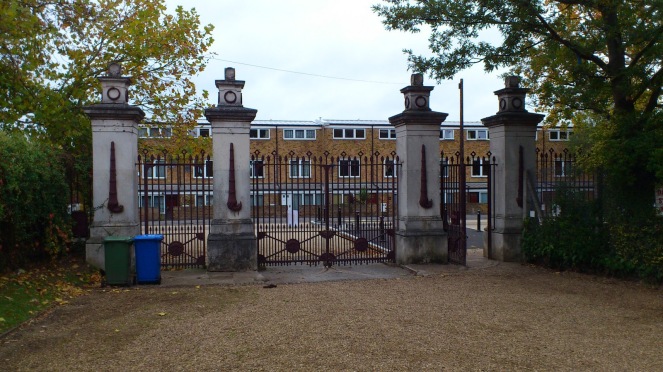
The Linden Grove entrance to Nunhead Cemetery.

Continue reading “A hidden gem in south east London: Nunhead Cemetery”

18th Century · Mortlake

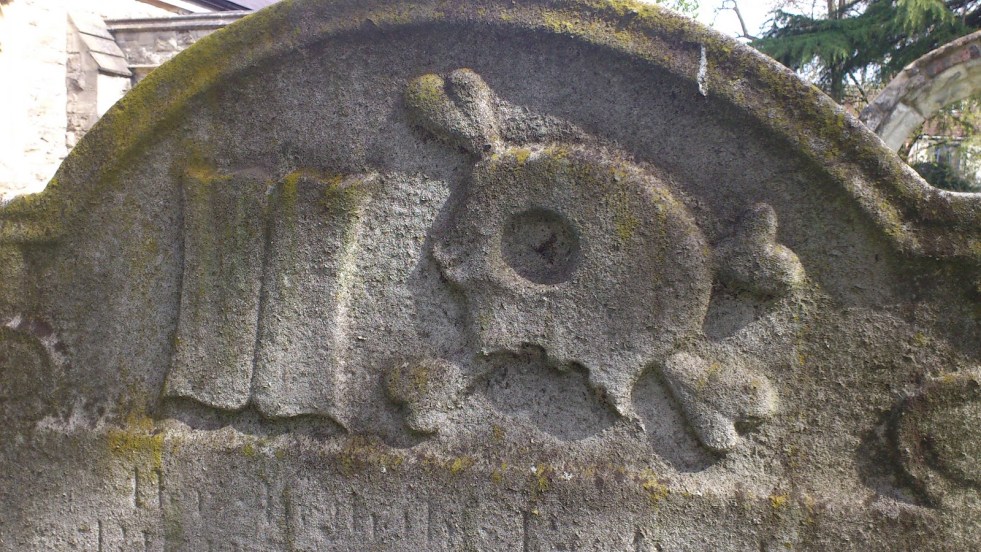
Skulls, astrologers and the sands of time: a Georgian graveyard in South West London

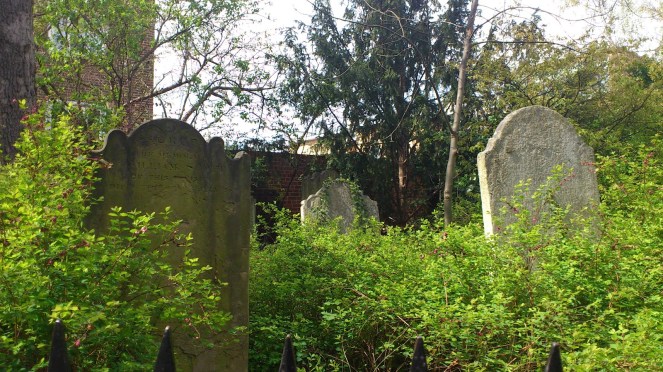
One of the best things about living in London is the great potential for discovering wonderful places completely by accident. In this instance, I was required to go to Mortlake to pick up a parcel from the sorting office that had been too big to fit through my letterbox.  Whilst walking up Mortlake High Street my eye was caught by some worn old gravestones peeping out through bushes and shrubs.

DSC_0774

Continue reading “Skulls, astrologers and the sands of time: a Georgian graveyard in South West London”

19th Century · Camden

Exploring the ancient church and burial ground of Old St Pancras

In the shadows of the international terminal at St Pancras Station, close enough for platform announcements to be heard, is a tiny old church which has a history that supposedly stretches back almost as far as St Pancras himself.  St Pancras was a Roman martyr who was beheaded in about 304AD for his Christian beliefs, and the church claims that the site has been a place of Christian worship since the 4th Century.  Until the 19th Century, Old St Pancras was a rural church, close to the River Fleet, but today it is nestled in amongst the railway infrastructure of St Pancras and the houses and flats of Somers Town. When approaching the church, the first thing that struck me was how high the ground level of the churchyard is compared to its surroundings.

OLYMPUS DIGITAL CAMERA

Continue reading “Exploring the ancient church and burial ground of Old St Pancras”

19th Century · Hammersmith

Fallen comrades: Caroline of Brunswick’s life and death in Hammersmith

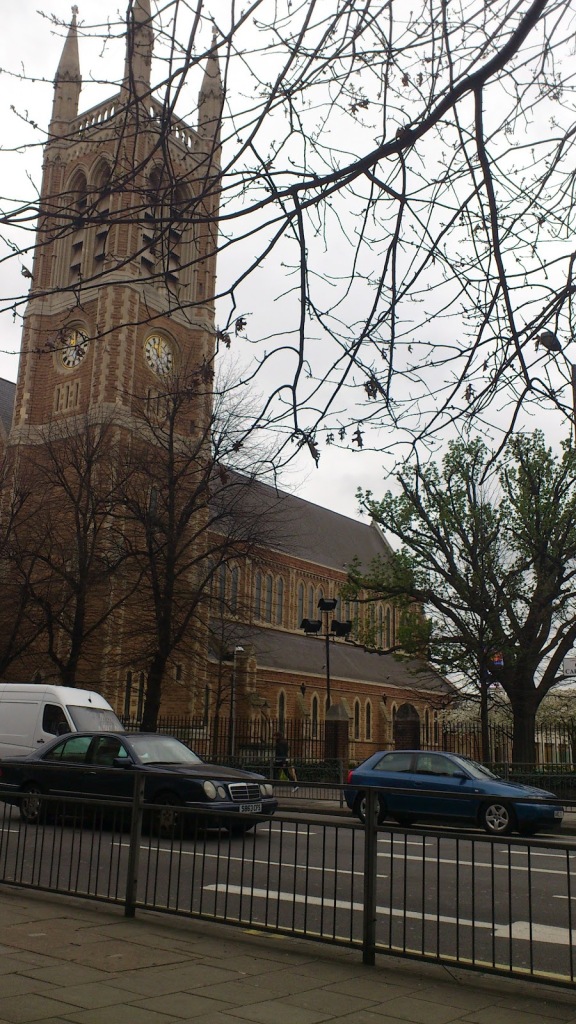
Hammersmith, with its riverside factories and wharves, was badly bombed during the Second World War – but that’s a story for another blog post.  Amongst the postwar concrete of the immediate area around Hammersmith tube station, a few older buildings and facades remain: a Georgian building that now houses a Chinese restaurant, rows of 19th Century villas leading down towards the river, and the splendid Gothic church of St Paul, built from a distinctive pinkish stone.

St Paul's Church, Hammersmith
St Paul’s Church, Hammersmith

Continue reading “Fallen comrades: Caroline of Brunswick’s life and death in Hammersmith”

City of London

Sifting through the stories about the London Stone

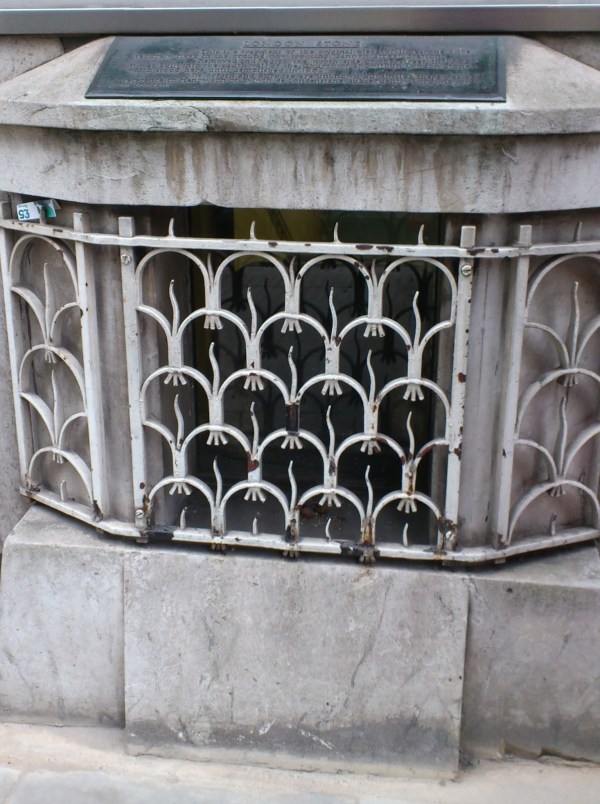
Like many of the sites and objects detailed in this blog, it’s quite possible to walk past the London Stone and never realise that it is there.  It’s easy to miss the grate pictured below, which is situated at street level on the front of a nondescript modern building on Cannon Street in the City of London.

001DSC_0396

The London Stone has a long and singularly odd history, with its origins shrouded in legends, fairytales and hearsay.  Similar to the superstition surrounding the ravens of the Tower of London, a saying goes that “So long as the Stone of Brutus is safe, so will London flourish.”  However, like the ravens, it is likely that this romantic myth dates from the Victorian period, although both superstitions still persist today.

Continue reading “Sifting through the stories about the London Stone”

18th Century · Bow

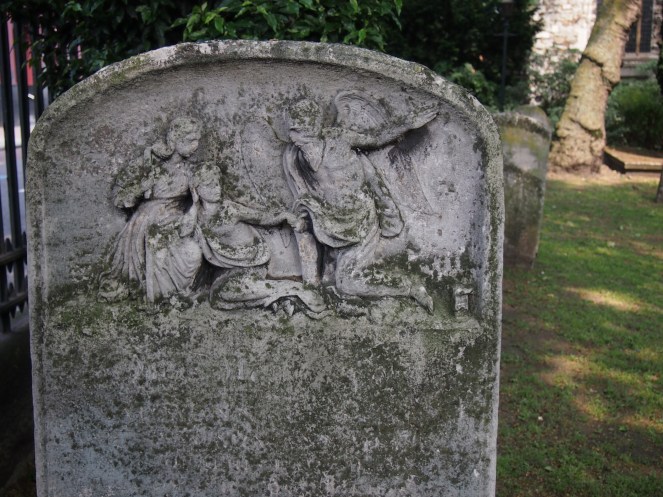
Beautiful carved headstone in Bow

OLYMPUS DIGITAL CAMERA

This beautiful carved headstone caught my eye from across the road when I was walking along Bow Road in east London.  Bow Church – or to give it its proper name, St Mary and Holy Trinity, Stratford Bow – is today marooned on an island in the middle of a busy road and the churchyard is railed off.  There are a number of old tomb stones in the churchyard, which has been a designated public garden since 1894.  The church, founded as a chapel of ease in 1311, is the only surviving medieval building in Bow.

The headstone is quite worn and mossy so I was unable to read the inscription on it, but the carving depicts what appears to be an angel taking the hand of a dying person, who is being comforted by a woman.  I’ve never seen an image like it on a gravestone before – it’s beautiful and poignant.  The quality of the carving is very fine – the folds in the fabrics worn by the figures are realistic and a great deal of detail, such as the angel’s hand, still survives today.  Whoever commissioned the headstone must have paid a lot of money for it.

Considering the damage inflicted on Bow Church during the Second World War, this lovely old headstone is a stunning survivor.

17th Century · 18th Century · City of London

The Hill of Bones: the story of Bunhill Fields

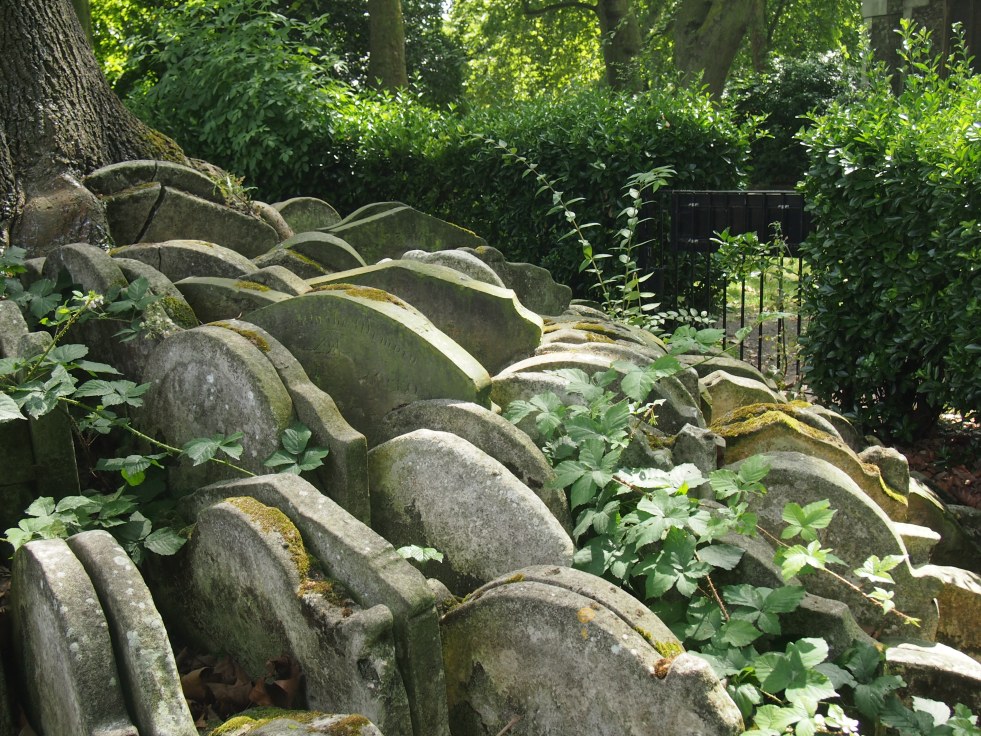
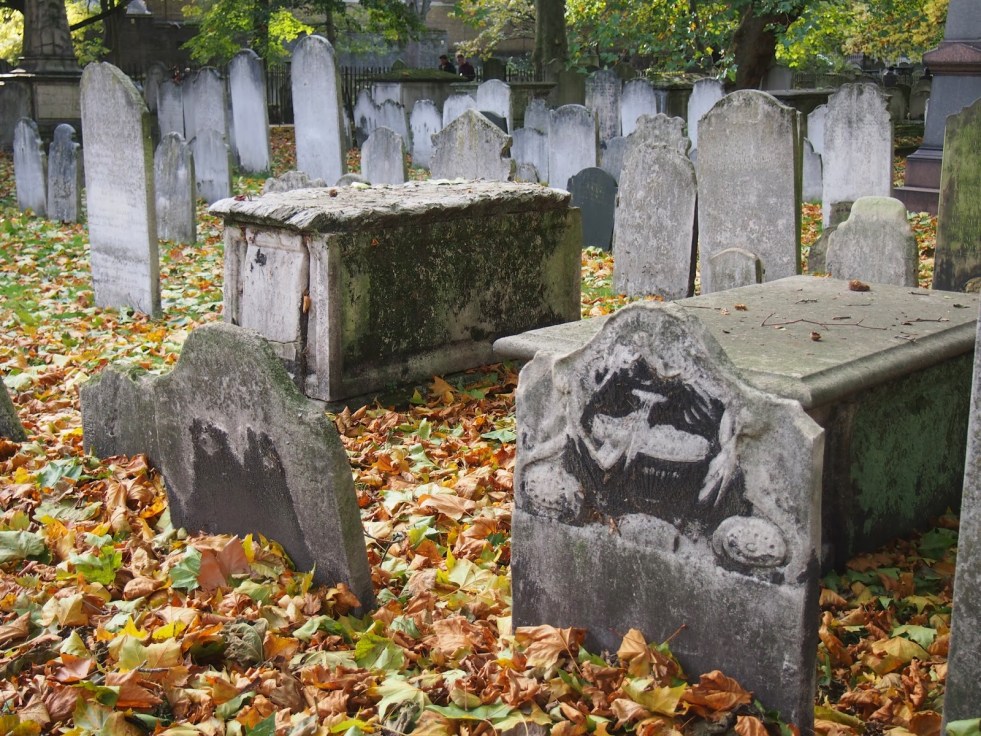
Originally a stretch of open land to the north of the City of London, Bunhill Fields got its name from its use as a burial ground during the Saxon period and a macabre event that took place in the mid-sixteenth century.  Cartloads of bones from the charnel house at St Paul’s Cathedral were transported out of the city and dumped in such large quantities that they formed a hill of bones, with a thin layer of soil covering the mound.  This “Bone Hill” was large enough to accomodate three windmills on top, which were presumably installed to make the most of the elevated ground.

PA305133

Continue reading “The Hill of Bones: the story of Bunhill Fields”