19th Century · Camden

Exploring the ancient church and burial ground of Old St Pancras

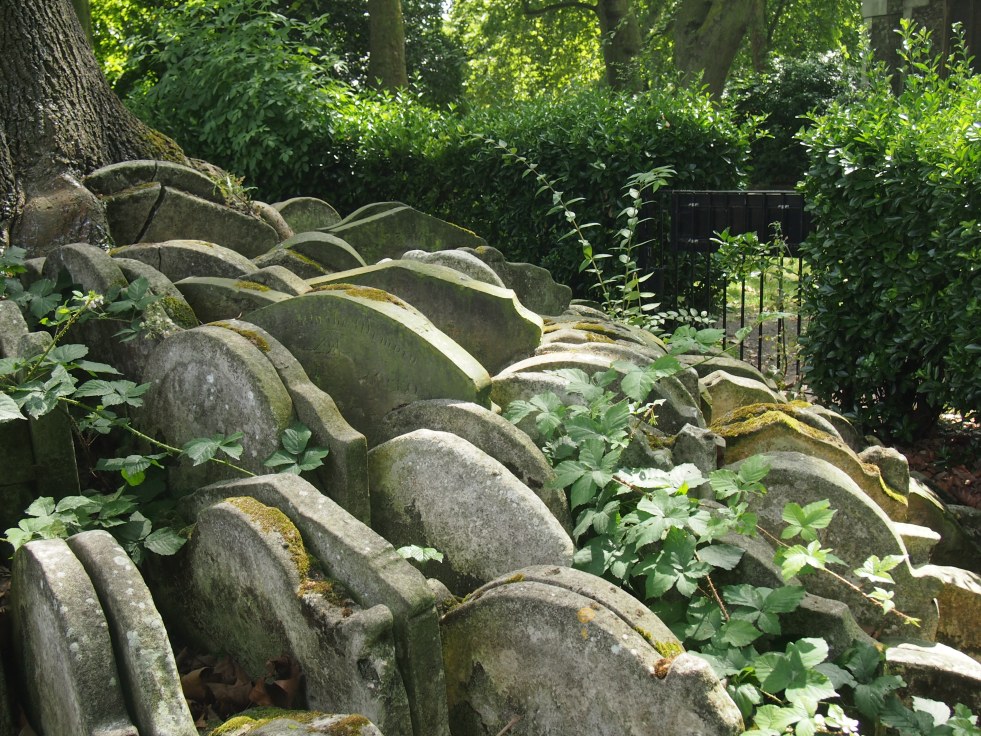
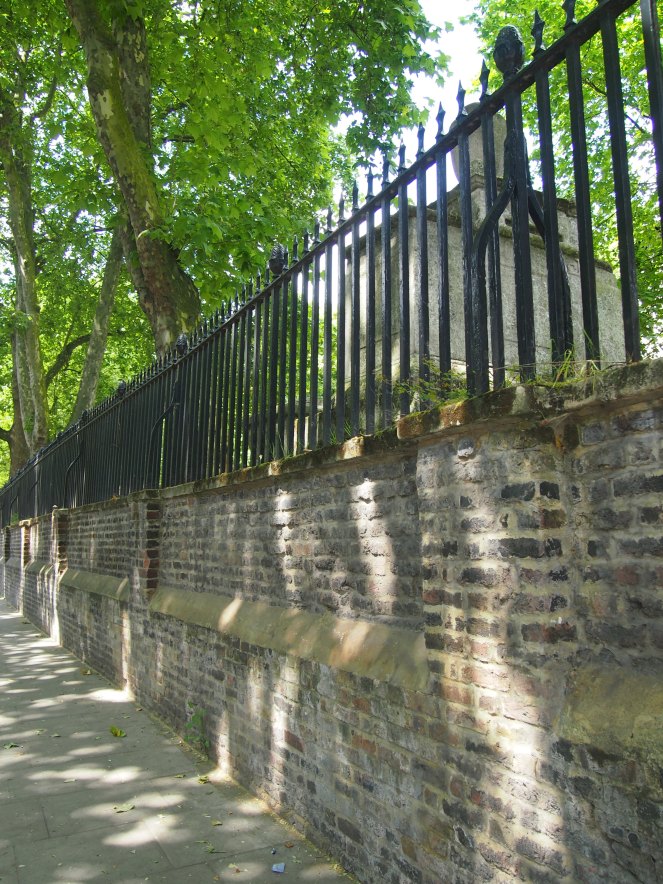
In the shadows of the international terminal at St Pancras Station, close enough for platform announcements to be heard, is a tiny old church which has a history that supposedly stretches back almost as far as St Pancras himself.  St Pancras was a Roman martyr who was beheaded in about 304AD for his Christian beliefs, and the church claims that the site has been a place of Christian worship since the 4th Century.  Until the 19th Century, Old St Pancras was a rural church, close to the River Fleet, but today it is nestled in amongst the railway infrastructure of St Pancras and the houses and flats of Somers Town. When approaching the church, the first thing that struck me was how high the ground level of the churchyard is compared to its surroundings.
OLYMPUS DIGITAL CAMERA

Continue reading “Exploring the ancient church and burial ground of Old St Pancras”
18th Century · Bow

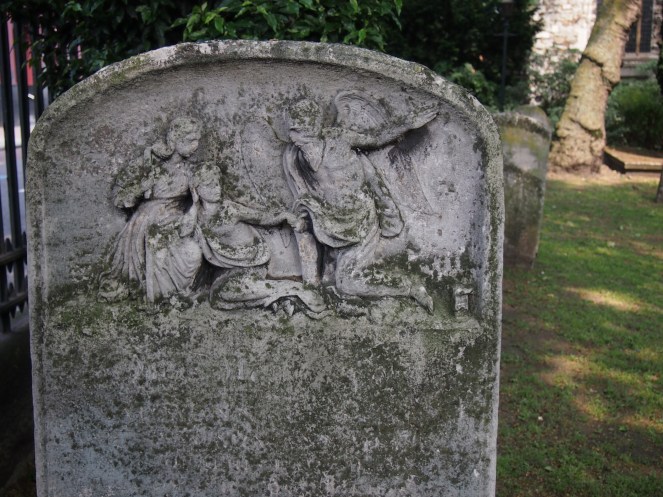
Beautiful carved headstone in Bow

OLYMPUS DIGITAL CAMERA

This beautiful carved headstone caught my eye from across the road when I was walking along Bow Road in east London.  Bow Church – or to give it its proper name, St Mary and Holy Trinity, Stratford Bow – is today marooned on an island in the middle of a busy road and the churchyard is railed off.  There are a number of old tomb stones in the churchyard, which has been a designated public garden since 1894.  The church, founded as a chapel of ease in 1311, is the only surviving medieval building in Bow.

The headstone is quite worn and mossy so I was unable to read the inscription on it, but the carving depicts what appears to be an angel taking the hand of a dying person, who is being comforted by a woman.  I’ve never seen an image like it on a gravestone before – it’s beautiful and poignant.  The quality of the carving is very fine – the folds in the fabrics worn by the figures are realistic and a great deal of detail, such as the angel’s hand, still survives today.  Whoever commissioned the headstone must have paid a lot of money for it.

Considering the damage inflicted on Bow Church during the Second World War, this lovely old headstone is a stunning survivor.

16th Century · City of London

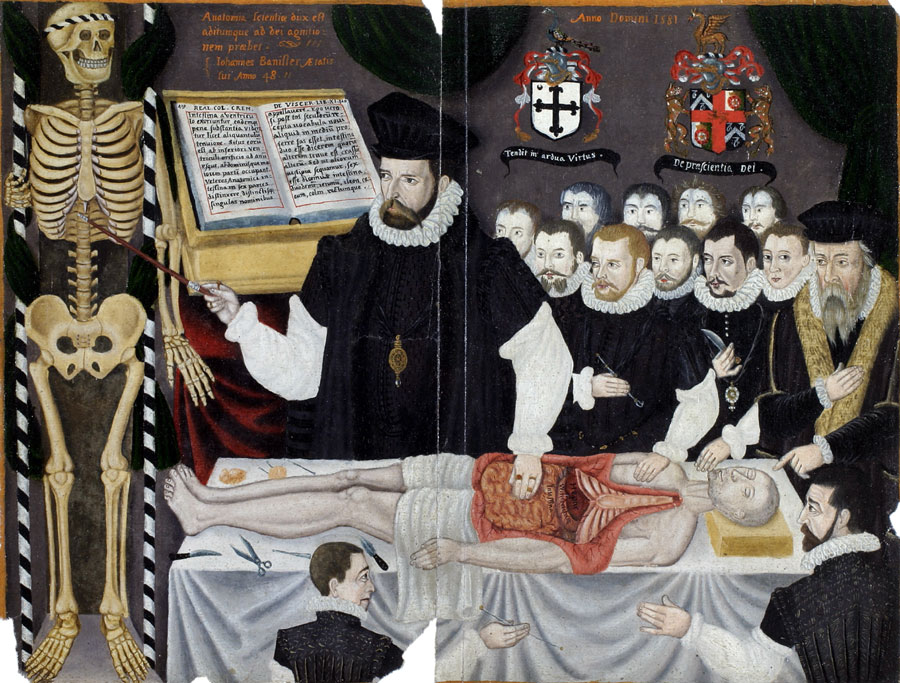
“The Anatomizer’s Ground” – Uncovering the history of St Olave’s, Silver Street

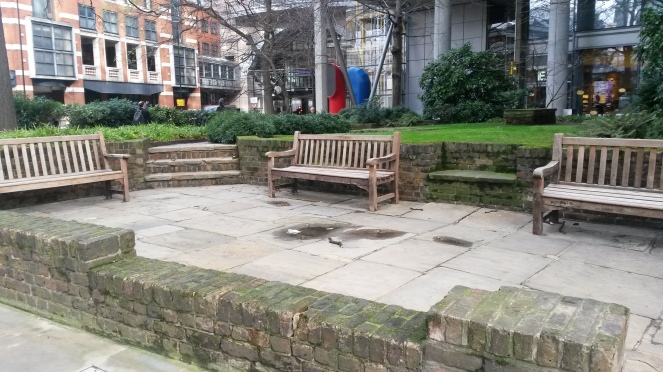
The City of London is home to many curious little green spaces, gardens that today are often teeming with office workers enjoying their lunch on a sunny day. The little garden pictured below is just one of them, a small space nestled between office blocks and the busy thoroughfare of London Wall.  In the introduction to his 1901 book The Churches and Chapels of Old London, J G White notes that “the sites of old churches are very plainly indicated in most instances by little green spots, formerly church-yards, now changed into pleasant gardens and resting places.”  The subject of today’s post is the “green spot” on the site of the church of St Olave, Silver Street.

Image shows three benches within a walled area, with a raised grassy area beyond

Many of the City’s churches were closed and demolished as the area’s population began to decrease in the 19th Century, and more were destroyed in the Blitz and never rebuilt.  St Olave’s was situated in a part of the Square Mile that was particularly heavily hit by aerial bombardment during the Second World War – it lies just south of London Wall and the Barbican complex, an area devastated by the Luftwaffe.  Silver Street, where William Shakespeare once lived, is no longer on London’s maps, utterly wiped out by the devastation of the Blitz.

Continue reading ““The Anatomizer’s Ground” – Uncovering the history of St Olave’s, Silver Street”