13th Century · Hythe

The extraordinary ossuary at St Leonard’s Church, Hythe

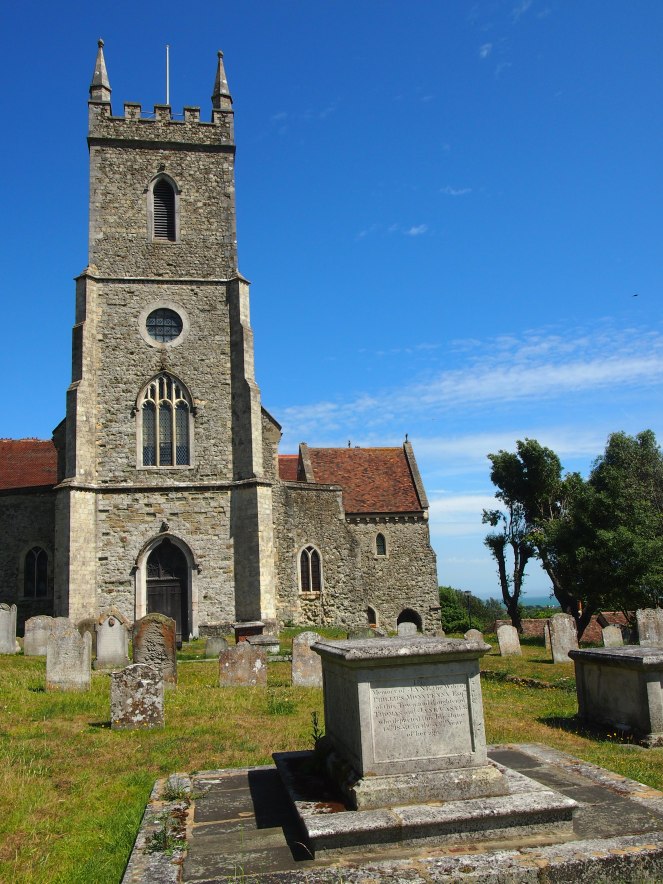
[Content note: this article contains multiple images of human remains] The church of St Leonard sits on a hillside in the pretty coastal town of Hythe in Kent, overlooking the English Channel.  Its history goes back at least 900 years, perhaps even further – a lot of the churches in the area have pre-Norman origins.  It’s a beautiful and imposing building – but if you visit the church’s crypt you will find yourself coming face to face with some unexpected people.
OLYMPUS DIGITAL CAMERA

Continue reading “The extraordinary ossuary at St Leonard’s Church, Hythe”
19th Century · 20th Century · City of London

St Alban, Wood Street: an old library book and a lonely church tower

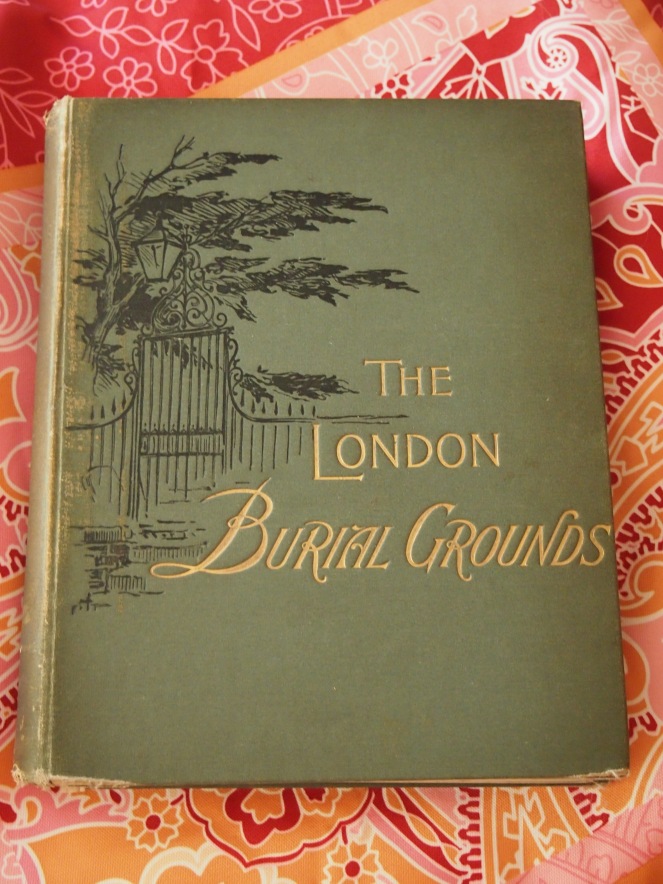
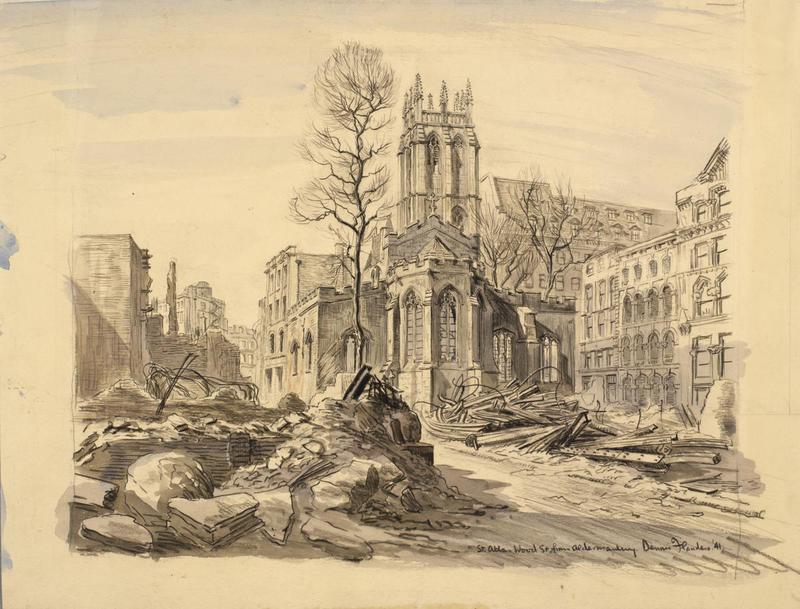
I recently bought a copy of Mrs Basil Holmes’ 1896 book The London Burial Grounds.   Isabella Holmes was a remarkable woman who took it upon herself to explore what had happened to the many burial grounds in inner London that had been closed in the 1850s.  Her book records her findings, something which you can imagine will be a really useful resource for me when researching London’s old and forgotten burial grounds.  However, what I wasn’t expecting was that the book itself would tell more stories than simply the ones contained within its pages.

OLYMPUS DIGITAL CAMERA

Continue reading “St Alban, Wood Street: an old library book and a lonely church tower”

17th Century · 19th Century · 20th Century · Chilworth

Chilworth Gunpowder Mills: three centuries of industry in the Surrey Hills

The Surrey Hills – an Area of Outstanding Natural Beauty – isn’t the first place that you’d associate with heavy industry.   Today, thousands of people are drawn to the picturesque hills and the lush green countryside.  However, hidden away in the valley close to the village of Chilworth, near Guildford, are the ruins of an industry that dominated the area for almost 300 years – the manufacturing of gunpowder.

OLYMPUS DIGITAL CAMERA

Continue reading “Chilworth Gunpowder Mills: three centuries of industry in the Surrey Hills”

19th Century · 20th Century · Bow

Tower Hamlets: a neglected cemetery reborn as a nature reserve

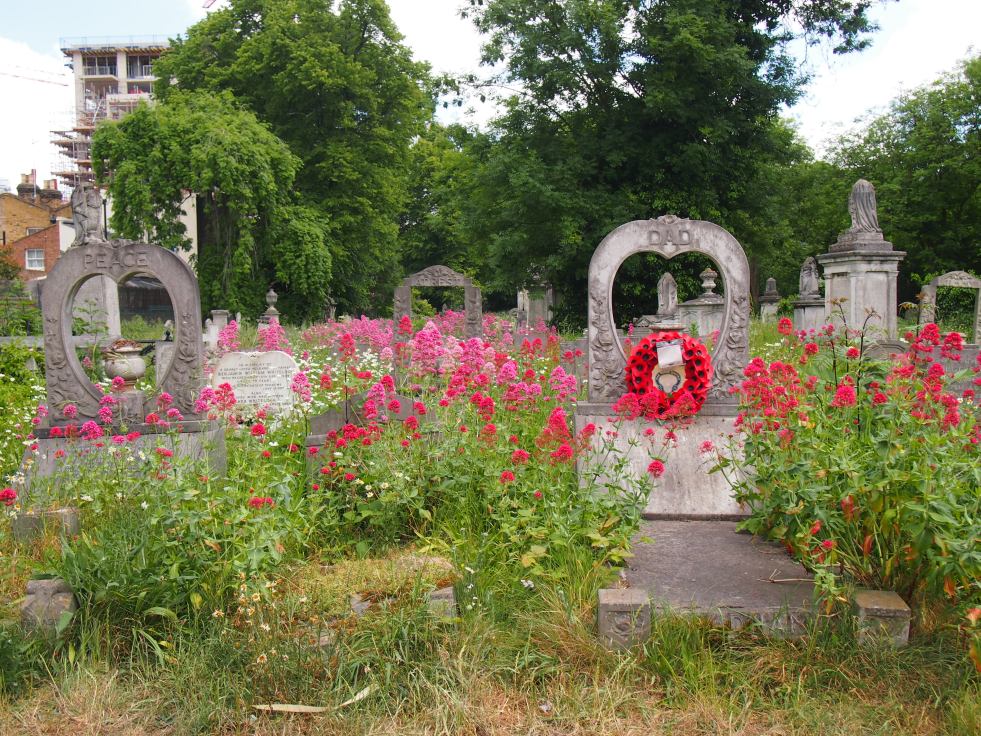
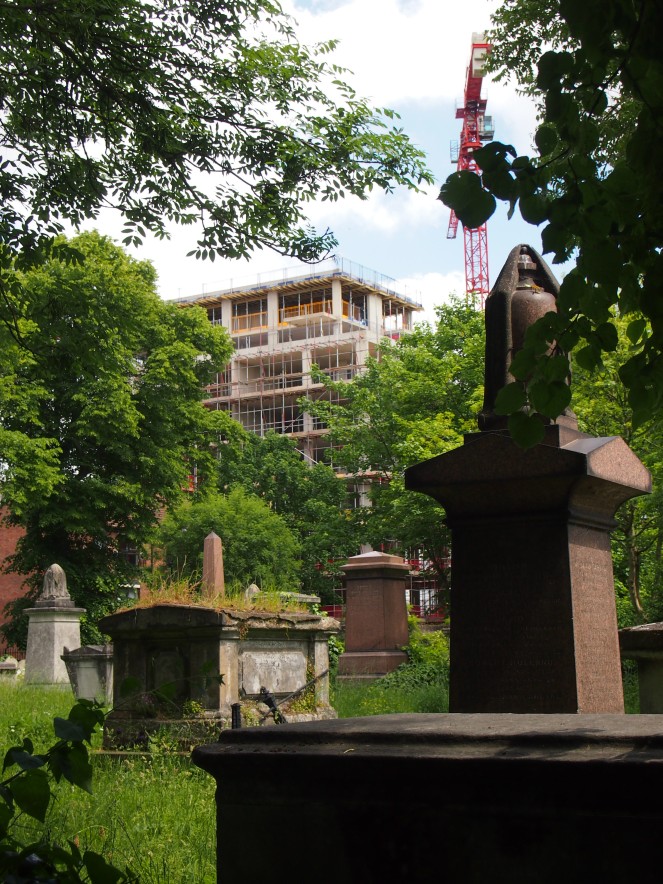
Many of London’s big Victorian Cemeteries have suffered over the years.  Originally set up and run by private companies, many of these companies ran into financial difficulties after the Second World War, effectively abandoning cemeteries or selling them cheaply to local authorities.  As a result, these cemeteries became overgrown and vandalised.  Tower Hamlets, one of London’s “Magnificent Seven” Victorian cemeteries, was one of places that found itself derelict and unloved in the late 20th Century.  Thankfully, today all of that has changed.

OLYMPUS DIGITAL CAMERA

Continue reading “Tower Hamlets: a neglected cemetery reborn as a nature reserve”

18th Century · 19th Century · 6th Century · 7th Century · Bronze Age · Greenwich

An ancient cemetery in the heart of Greenwich Park

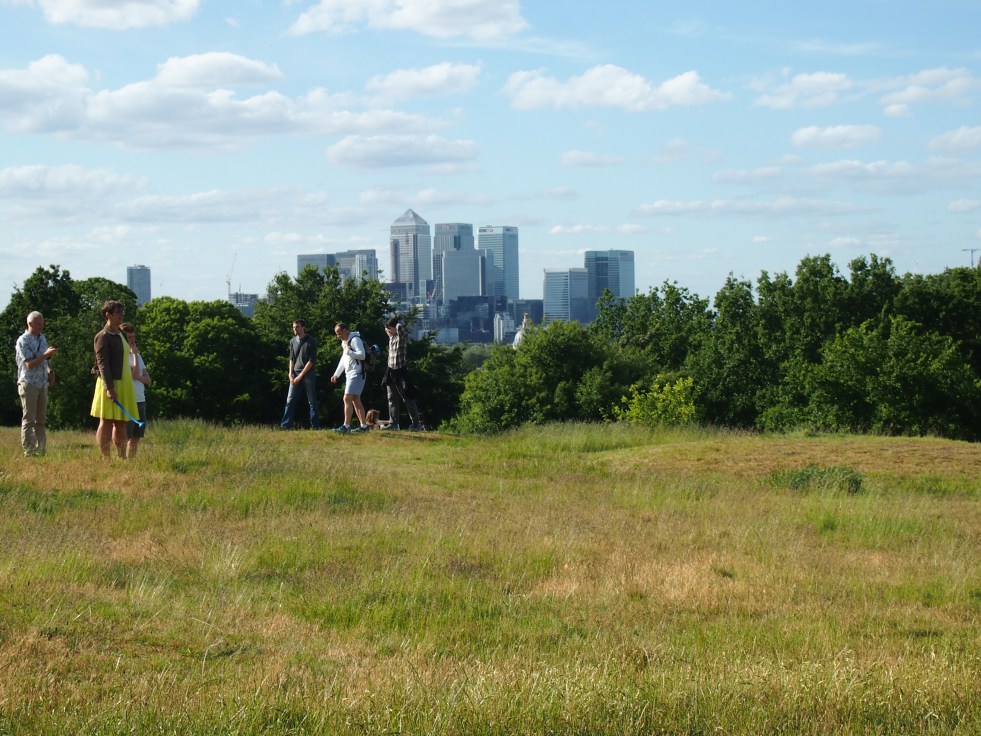
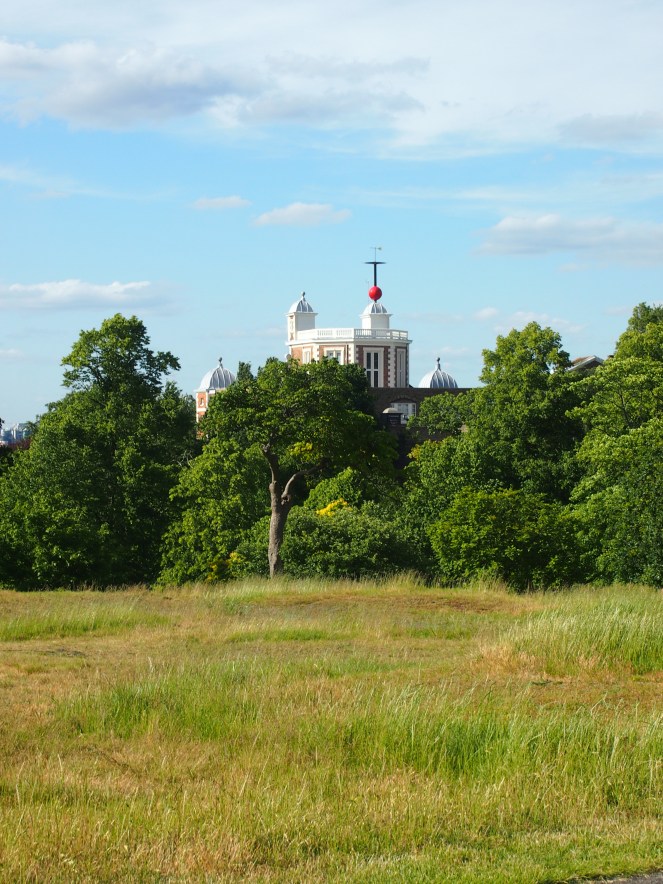
Not far from the famous Royal Observatory in Greenwich Park is a field that was once a large cemetery.  Today, all that remains are a few modest mounds that mark where the burials took place, and it’s unlikely that most people who walk past them, or sit on them, have any idea what they are.  This is perhaps not surprising, as this old burial ground is over 1,000 years old.

OLYMPUS DIGITAL CAMERA

Continue reading “An ancient cemetery in the heart of Greenwich Park”

12th Century · 18th Century · 20th Century · Edwinstowe

The Major Oak: capturing the imagination for centuries

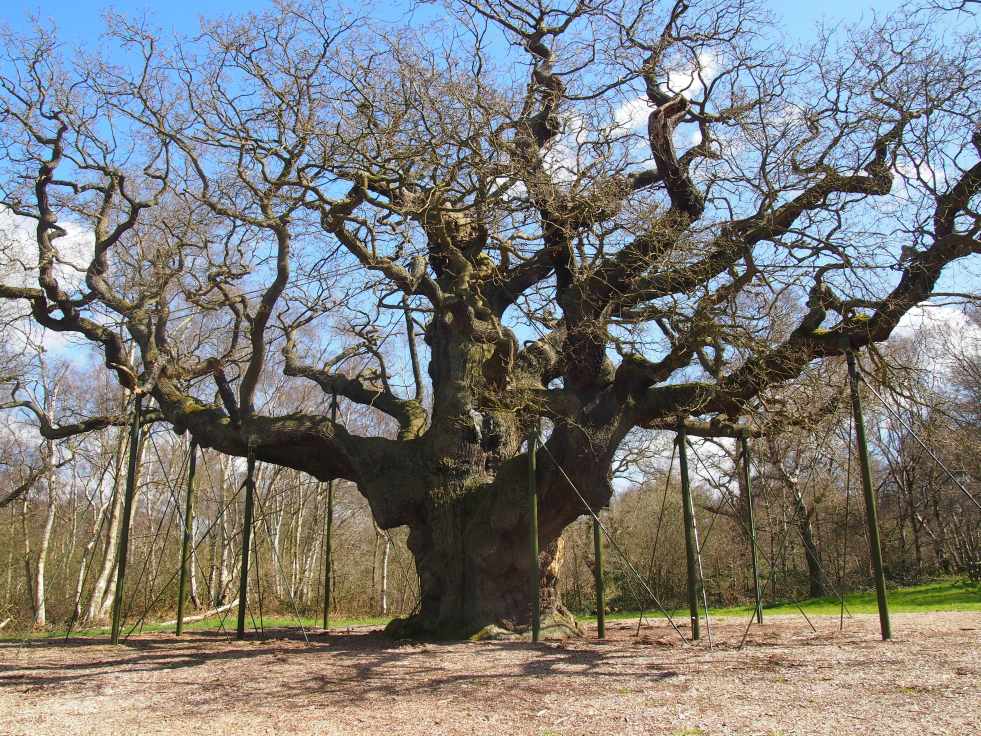
Oak trees loom large in English history.  From the sacred oak groves of pre-Roman Britons and the oak wands used by Druids to the oak tree that sheltered the future King Charles II as he escaped from the forces of Oliver Cromwell and the countless oaks used to construct England’s proud navies and merchant ships, this tree – perhaps more than any other – is seen as the national tree of England.  Many individual oaks up and down the country are revered and protected for their age, their size and shape or the stories attached to them.  The oak we’re looking at today is famous not just for its huge size and distinctive shape, but also for its link to that most famous of English legends, Robin Hood.

OLYMPUS DIGITAL CAMERA

Continue reading “The Major Oak: capturing the imagination for centuries”

19th Century · 20th Century · Stepney

The little mortuary at St George in the East and its reincarnation as a museum

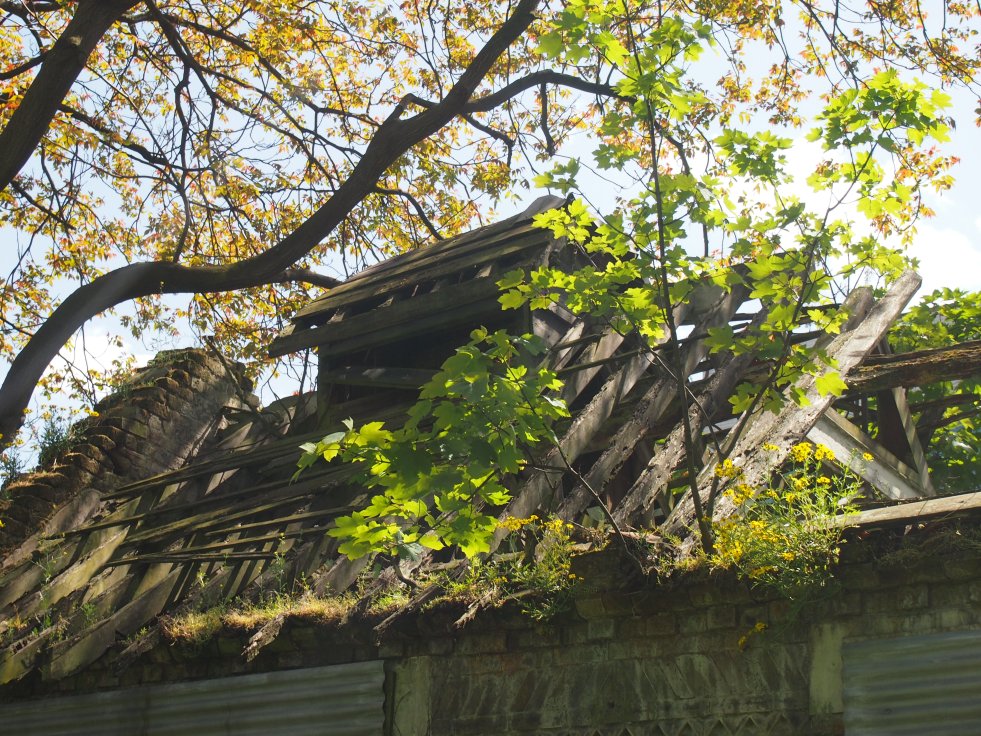
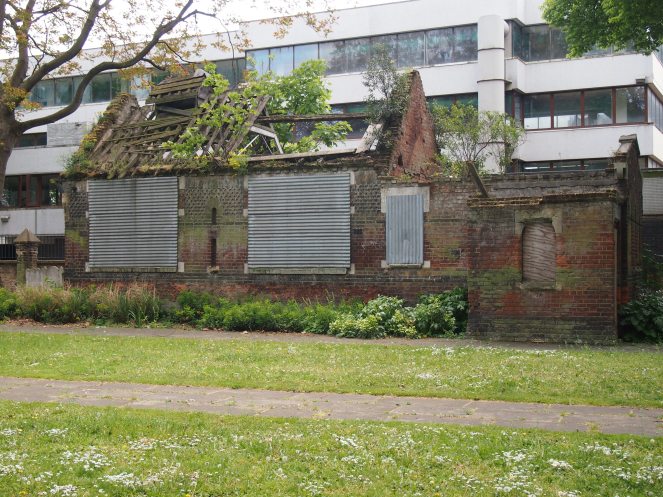
St George’s Gardens, the park on the site of the former churchyard of St George in the East in Stepney, is a neat, peaceful place – when I visited, the play area was full of children, and other people were relaxing on benches or looking at the old monuments near the church.  In the midst of all of this is a derelict building that looks terribly sad and out of place.  However, this forlorn little building has a fascinating history that includes that most infamous of East End criminals, Jack the Ripper, and later became a pioneering centre for the education of local children.

OLYMPUS DIGITAL CAMERA

Continue reading “The little mortuary at St George in the East and its reincarnation as a museum”

19th Century · 20th Century · Kensal Green

A walk among the stone saints and angels: St Mary’s Cemetery, Kensal Green

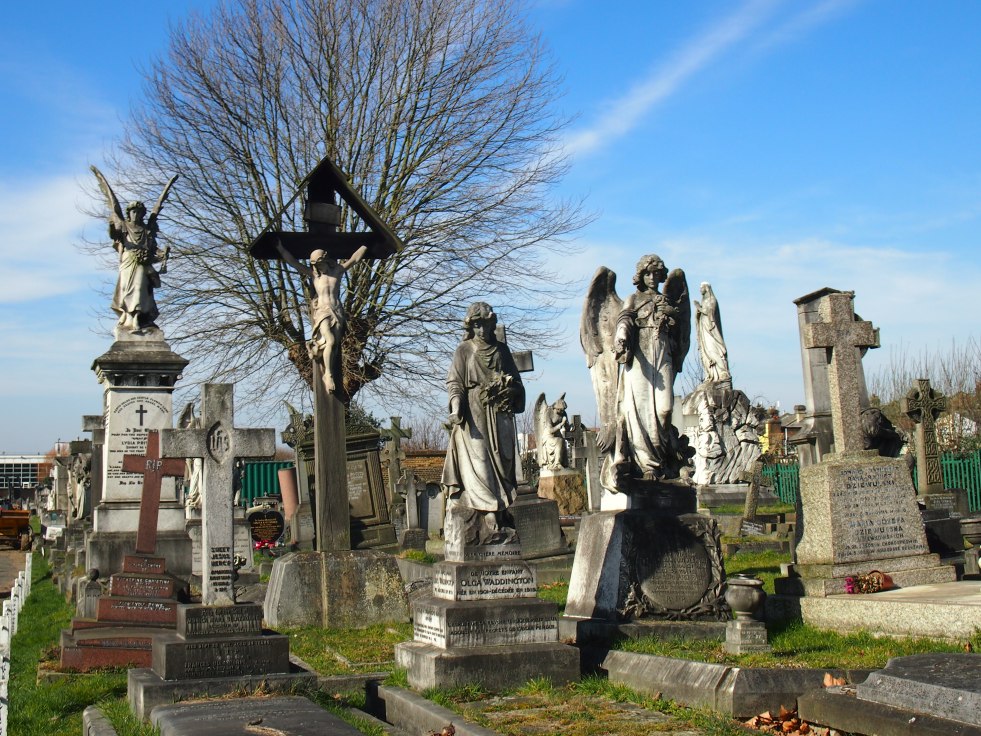
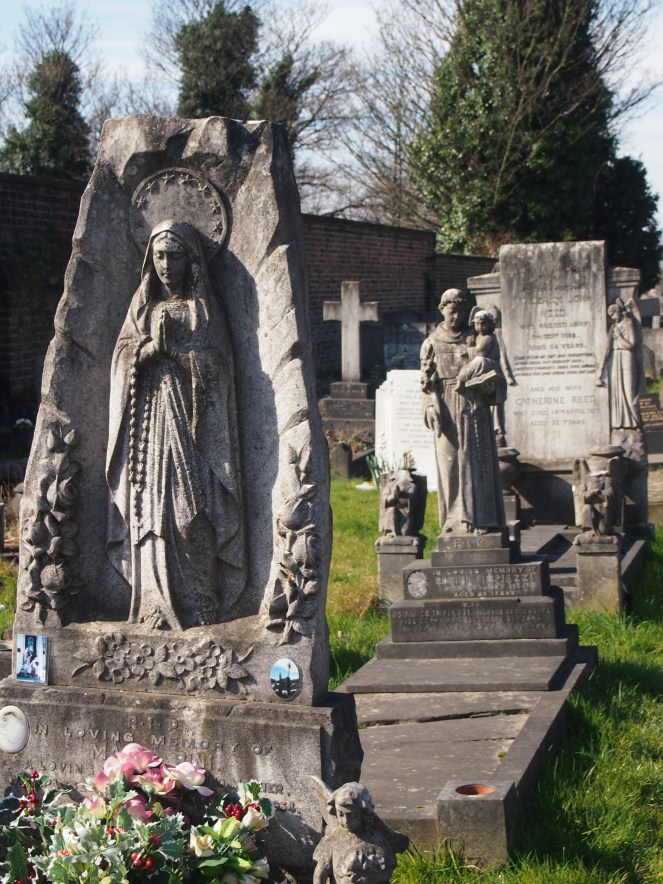
Next door to the well-known Kensal Green, one of London’s “Magnificent Seven” cemeteries, is another vast necropolis.  The two cemeteries are separated only by a tall brick wall, and although they are similar in age, and include many similar memorials, there are differences between the two cemeteries – some subtle, others less so.  St Mary’s Cemetery at Kensal Green is one of only two burial grounds in London that caters exclusively for Roman Catholics, and around the cemetery the visitor can see many symbols that reflect the faith of those buried there.

OLYMPUS DIGITAL CAMERA

Continue reading “A walk among the stone saints and angels: St Mary’s Cemetery, Kensal Green”

20th Century · Clerkenwell

Airships over London – in war and peace

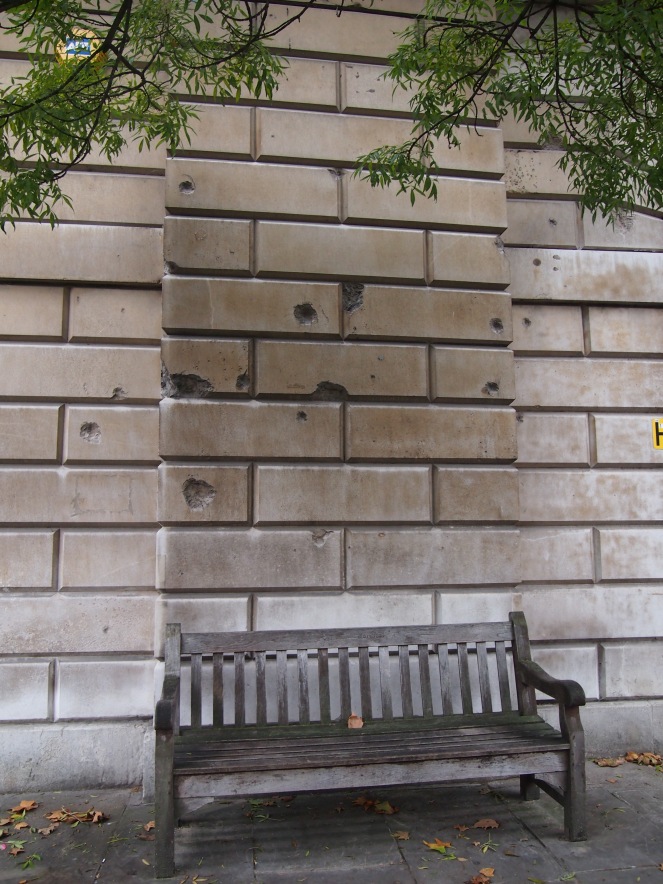
Many people walking past the wall of St Bartholomew’s Hospital on West Smithfield, close to the memorial to William Wallace, stop to look at a series of craters and marks on the wall that look as though they were caused by an explosion of some sort.  These scars are from a devastating V2 rocket attack on the area during the Second World War, but this wasn’t the first aerial attack to bring death and destruction to this part of London.  Bartholomew Close, not far from the scarred walls, was hit during one of the very first air raids on London, a terrifying Zeppelin raid in 1915.

OLYMPUS DIGITAL CAMERA

Continue reading “Airships over London – in war and peace”

17th Century · Isleworth

A plague pit by the Thames: All Saints, Isleworth

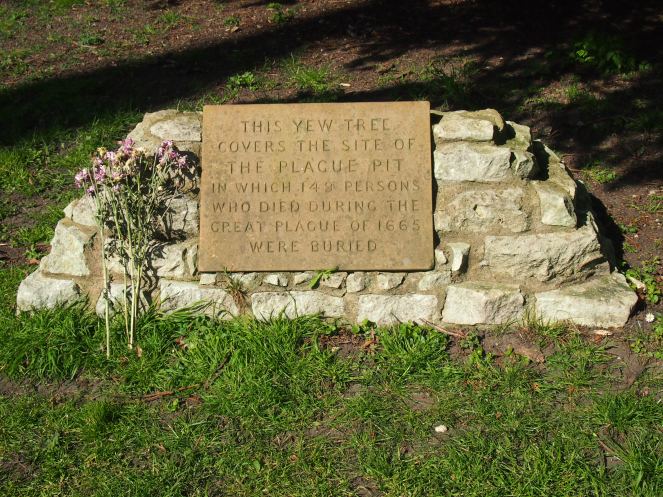
London’s many plague pits have a certain dark allure – they’re mysterious because so many of them lie unmarked, hidden and forgotten under the city’s streets, buildings and parks.  We’ve seen pictures of archaeologists excavating long-lost mass graves uncovered on building sites, with huge jumbles of bones emerging from the soil and centuries-old eye sockets peering out at us.  We’ve heard dark tales of homes built over old plague pits, haunted by restless spirits.  But upstream of the old city, in a quiet suburb by the Thames, a plague pit lies in plain sight – marked by a yew tree and a little memorial.  This is the plague pit at All Saints church, Isleworth, where local plague victims were laid to rest in a mass grave in 1665.

OLYMPUS DIGITAL CAMERA

Continue reading “A plague pit by the Thames: All Saints, Isleworth”